
Last updated November 20, 2026
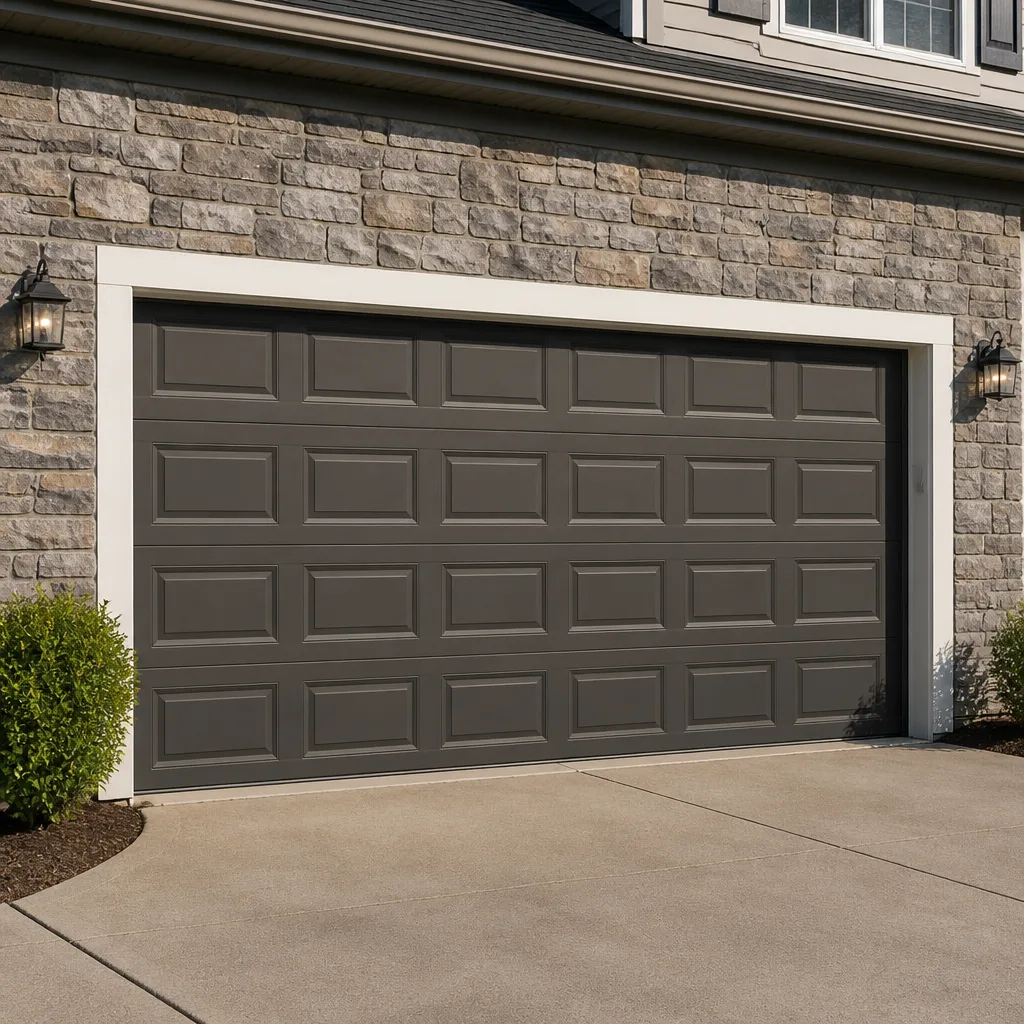 Raised-panel steel
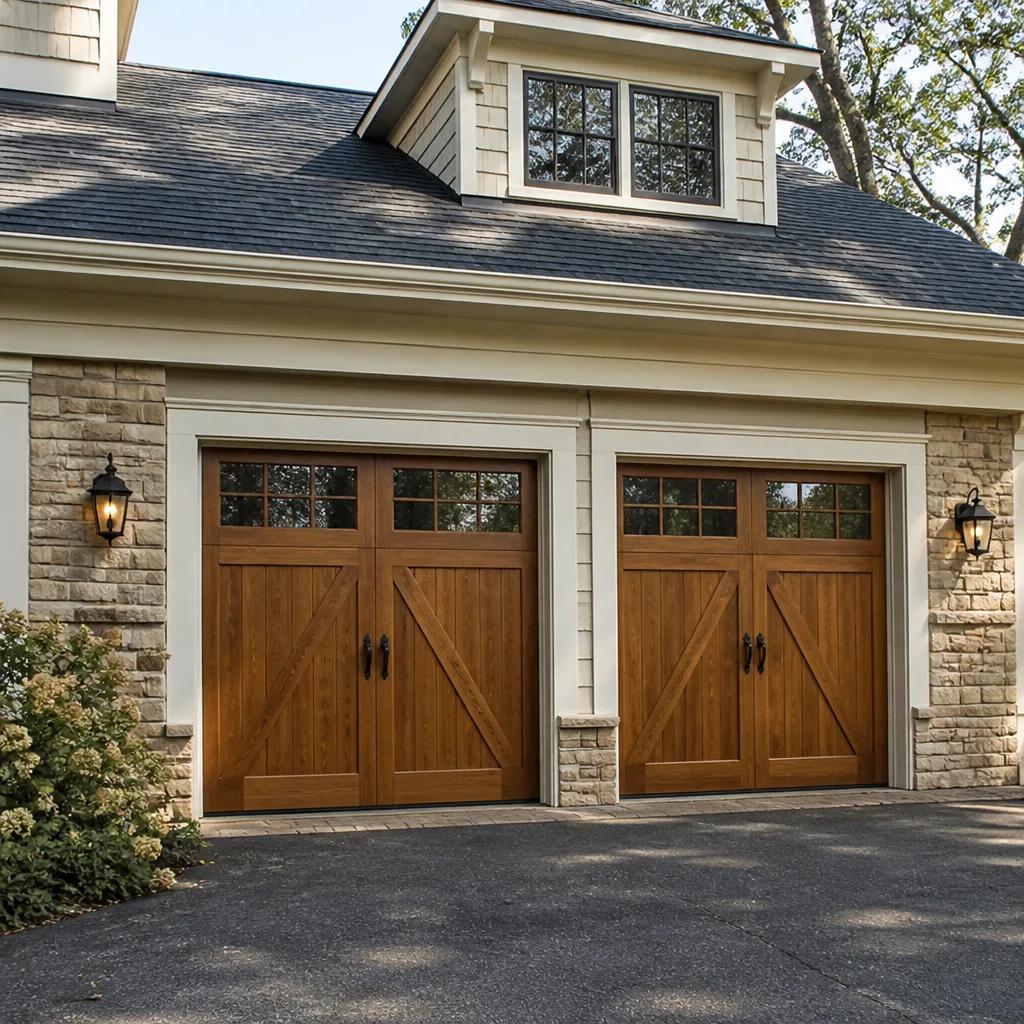 Carriage house
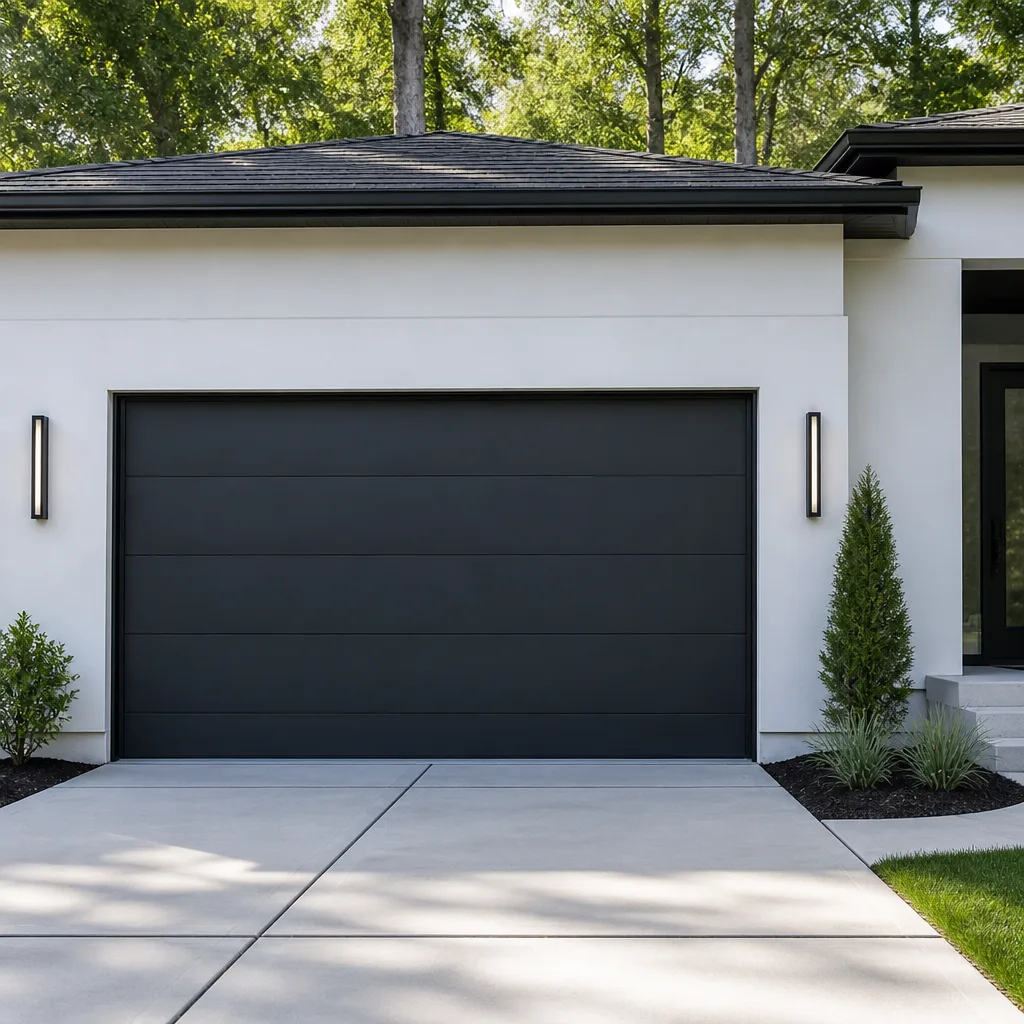 Modern flush
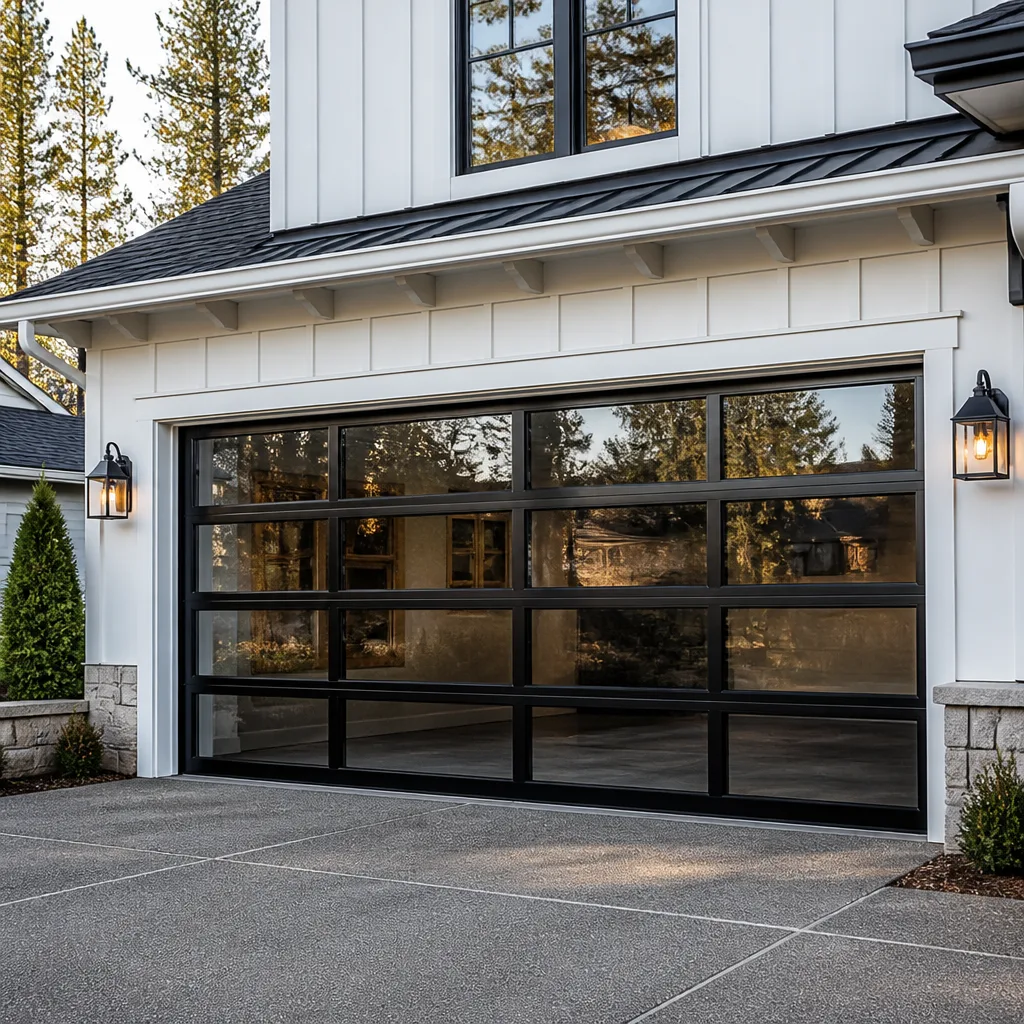 Full-view glass
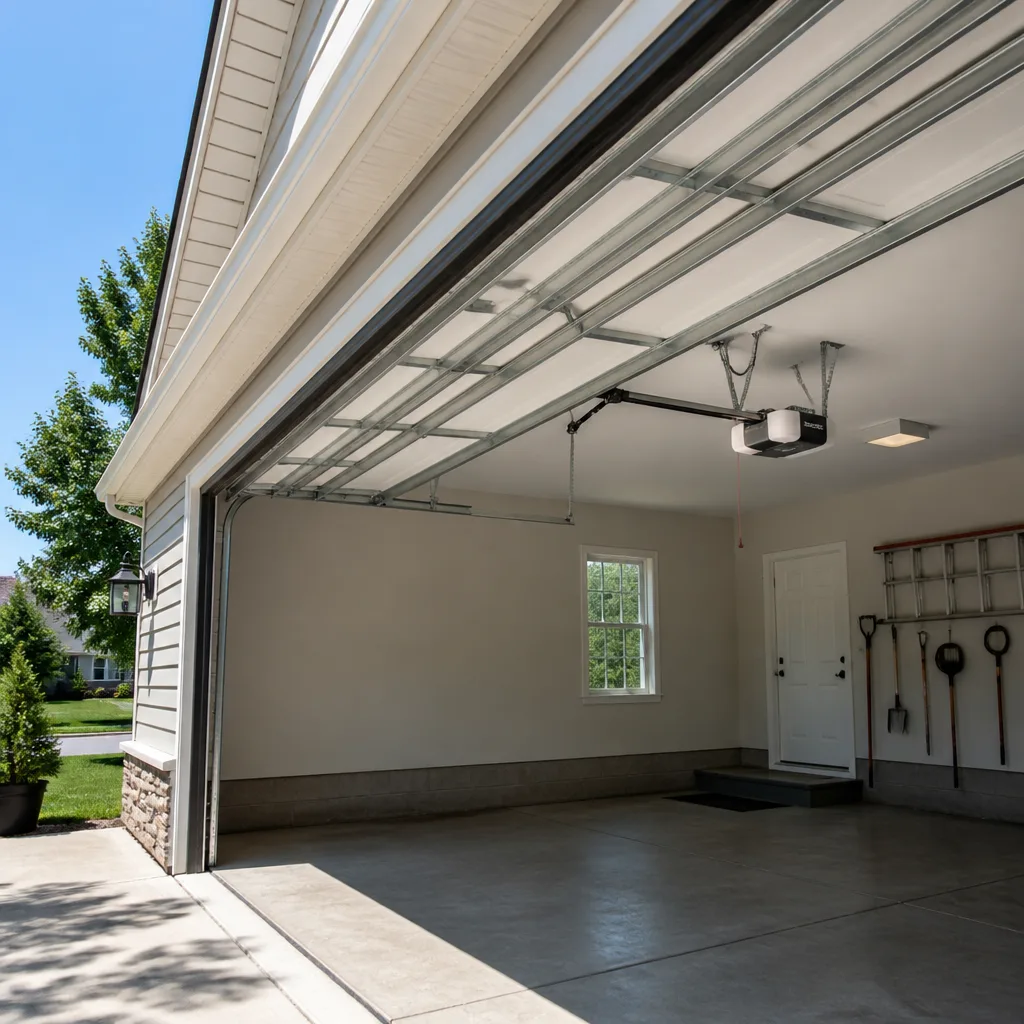 LiftMaster openers
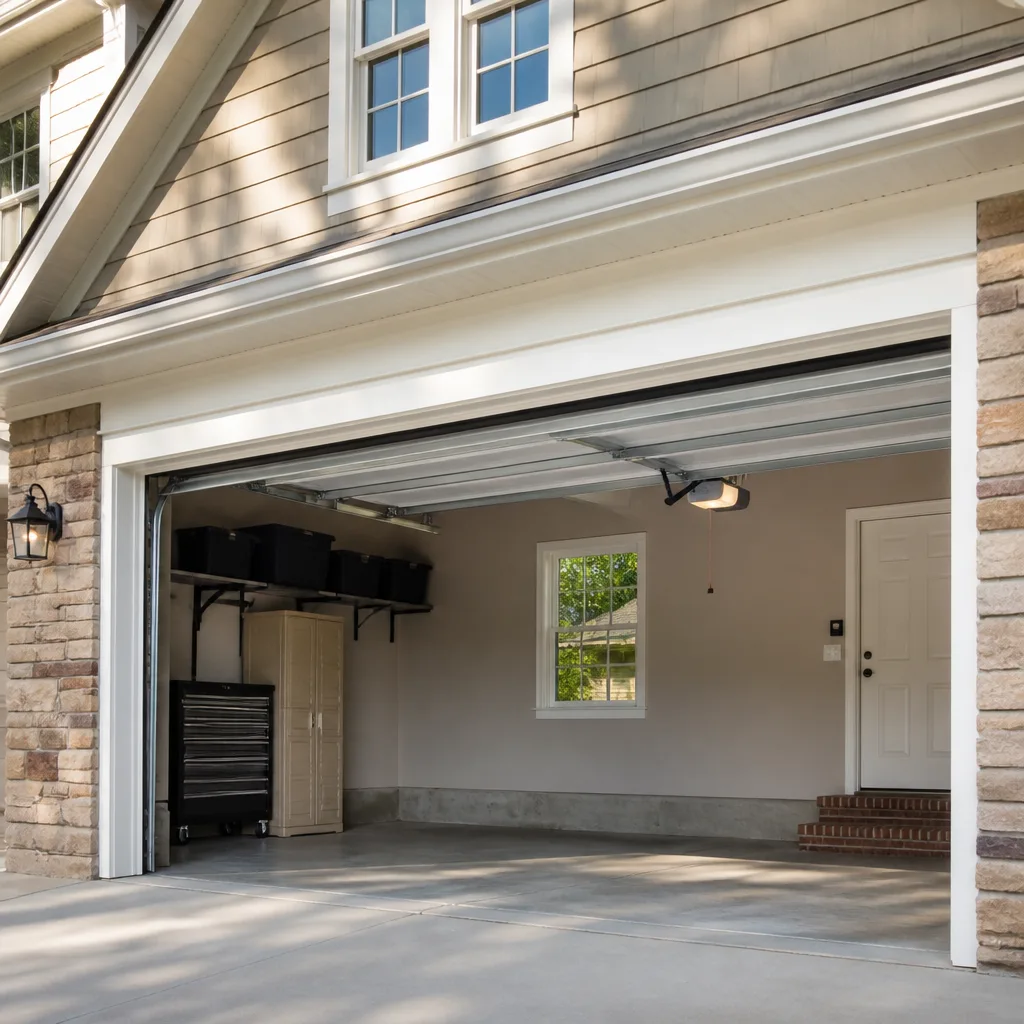 Chamberlain openers
Full 25-point door and opener safety check with every visit - springs, cables, rollers, tracks, and your LiftMaster or Chamberlain opener included
You get a price before we start. It does not change when the pro arrives.
Get your free estimateThe Complete Guide to Garage Doors in Elizabeth
Most homeowners in Elizabeth assume a new garage door is a simple swap. Measure the opening, order a door, bolt it on. That assumption holds in new construction, where garages were framed with modern header clearance and standardized dimensions in mind. In Elizabeth, it often doesn’t hold. A large share of the city’s housing stock went up before the 1970s, and many of those garages were built with tighter clearances, shallower depths, and framing that predates today’s door hardware. The door that measures correctly on paper won’t always operate correctly once it’s hung. This guide covers what Elizabeth’s building stock, lot sizes, and weather actually mean for sizing, materials, openers, permits, and repair decisions. If you’re sorting out a door problem, a replacement, or an opener that’s acting up, start here.
Quick Answer
A garage door project in Elizabeth starts with the building, not the catalog: older homes often need header clearance verified and framing reinforced before a new door is installed, and attached versus detached garages change both product options and permit requirements. Material choice should account for the humid summers and road salt of the Turnpike corridor, and opener selection depends on the headroom your garage actually has. A free on-site measure and written estimate is the only reliable way to know which door fits your specific garage.
Styles & brands we work with
- Raised-panel steel
- Carriage house
- Modern flush
- Full-view glass
- LiftMaster openers
- Chamberlain openers
Table of Contents
- How Elizabeth’s Pre-1970s Housing Stock Affects Door Sizing
- Which Door Materials Hold Up to Elizabeth Weather
- The Brand Landscape: Local Dealers vs. Union County Big-Box Stores
- Attached vs. Detached Garages: Product Choices and Permits
- Common Framing Problems in Older Elizabeth Garages
- Opener Mounting Options and Headroom Realities
- Repair or Replace? A Decision Framework
- What Garage Door Work Typically Costs in Elizabeth
How Elizabeth’s Pre-1970s Housing Stock Affects Door Sizing
Modern overhead garage doors are designed around a standard set of clearances: enough headroom above the opening for the door in its open position, plus the track and spring assembly. Garages built in Elizabeth before the 1970s frequently don’t have those clearances. You see this most in the city’s older colonials and brick row homes, where the garage was carved into a footprint that prioritized living space. The opening might be 7 feet tall but the ceiling above it sits at 7 feet 4 inches, leaving nowhere for a standard door panel to travel.
This is where low-headroom conversion kits come in. They change the geometry of the door’s travel so that a standard panel door can operate in a space that couldn’t handle a conventional setup. A door that “fits” the opening on a tape measure can still be undriveable without one.
What to check before ordering any door for an older Elizabeth garage:
- Headroom: measure from the top of the door opening to the ceiling, not to the nearest obstruction.
- Backroom: the horizontal distance from the opening into the garage, which needs to clear the door plus track.
- Sideroom: the space beside the opening for the vertical track and torsion hardware.
- Square and plumb: older framing often shifts. A door hung in an out-of-square opening binds, rubs, and wears its seals fast.
The opening itself may also be non-standard. A door catalog lists common widths and heights, but plenty of Elizabeth garages sit a few inches off either standard. That’s usually solvable, but only after a real measurement. If you’re ordering a replacement, have someone who knows what they’re looking at measure the opening in person. That’s the whole point of the free on-site measure, and it’s the step that keeps you from discovering a clearance problem after the door has already arrived.
Which Door Materials Hold Up to Elizabeth Weather
Elizabeth sits in a humid, four-season climate with real summer heat and a winter that brings road salt onto every driveway near the Turnpike corridor. That combination narrows the honest list of door materials.
Steel is the most common choice, and for good reason. It’s strong for its weight, takes a factory finish well, and holds up to the humidity swings of a New Jersey summer. The catch is the salt. In a household that tracks road brine and slush into the garage every winter, exposed steel edges, welds, and the bottom panel are the first places rust starts. A factory-applied finish and regular rinsing of the bottom section go a long way.
Aluminum resists rust better than steel and weighs less, but it dents more easily. For a low-traffic carport-style door or a garage that won’t take knocks, it’s a reasonable option. For a busy family driveway, steel usually wins on durability.
Wood looks right on many of Elizabeth’s older homes and blends with period architecture. But wood needs more maintenance in this climate: seasonal sealing, attention to the bottom edge where moisture collects, and repainting on a shorter cycle than you’d need with steel. It’s a choice to make with eyes open.
Composite and insulated steel with a wood-look finish try to get you wood’s appearance without the upkeep. Insulated panels also matter in a garage attached to living space.
- Steel: best balance of cost, strength, and low maintenance in Elizabeth’s climate
- Aluminum: rust-resistant, lighter, more prone to dents
- Wood: period-correct looks, higher maintenance in wet winters
- Insulated panels: worth it on an attached garage, especially one under or beside bedrooms
Whichever you pick, the bottom panel and any exposed metal edges take the worst of the road salt. A quick rinse of the lower section and track during the winter keeps corrosion from getting a foothold.
The Brand Landscape: Local Dealers vs. Union County Big-Box Stores
The door and opener brands sold at big-box stores in Union County and those carried by local garage door dealers overlap, but not completely. That gap matters when you need a part, a warranty service call, or a door that matches an existing one on a row of similar homes.
For openers, the names you’ll see most are LiftMaster, Chamberlain, Genie, and Craftsman. Chamberlain and LiftMaster are closely related lines, and both show up often in Elizabeth garages. Genie covers a wide range of price points and is common in older installations. Craftsman openers were sold heavily through big-box channels and are still everywhere in Union County. If your opener has a Craftsman badge on it, a technician who works on that line will recognize the rails, logic board layout, and replacement parts quickly.
For doors, Clopay is a widely available name and a sensible starting point for a steel door replacement. Local dealers also carry doors in styles matched to specific neighborhood architecture, which matters more in Elizabeth than in a newer suburb where every garage looks the same.
Two practical differences between a local dealer and a big-box purchase:
- Measurement and fit: a dealer measures your actual opening; a big-box door is sold against the nominal size you write on a form.
- Warranty service: when a panel arrives damaged or a spring fails early, a local dealer handles the part. A store return policy may not cover installation labor.
That’s why we work on the brands we do. Recognizing a LiftMaster opener or a Clopay panel on sight means the diagnostic starts from a known baseline instead of a guess. If you need garage door opener repair, the brand on your unit is the first thing a technician should be able to identify.
Attached vs. Detached Garages: Product Choices and Permits
Elizabeth has both attached and detached garages, and the split runs along neighborhood lines. Many row homes and older colonials have attached garages tucked under or beside the main house. Plenty of the postwar ranches and lots with alley access have detached garages at the rear of the property.
Why it matters for the product:
- Attached garage: it shares a wall and often a floor or ceiling with living space. An insulated door reduces noise and heat transfer, which is worth considering. An opener with a battery backup or a quieter belt drive makes more sense when bedrooms sit above the garage.
- Detached garage: temperature swings are bigger and the structure is often simpler. A standard steel door does the job. You may also have more flexibility on style without worrying about matching the house facade.
Why it matters for permits: most cities require a permit for a garage door replacement or any structural change, and the requirements can differ between attached and detached structures. We won’t tell you what Elizabeth’s building department requires because those rules are specific and change. Call them and ask before you order. The framing around a door opening is structural, and reinforcement work often needs to be inspected. Skipping that step can create a real problem at resale.
One more Elizabeth-specific wrinkle: on lots with alley access, the door faces the alley rather than the street, which changes the wind and weather exposure and often the size of the opening. Measure what’s actually there, not what a previous owner’s paperwork says.
Common Framing Problems in Older Elizabeth Garages
Before a new door goes up, the opening has to be able to carry it. In Elizabeth’s older garages, this is where projects run into trouble that has nothing to do with the door itself. A modern insulated steel door weighs meaningfully more than the thin wood doors that were original to some of these structures. Old headers that were adequate for a light door may flex under a heavier one.
What a technician should check before installation:
- Header integrity: look for sagging, splitting, or rot in the beam above the opening. Any of those calls for reinforcement before a new door goes up.
- Jambs and sideroom: the vertical framing on either side carries the track. Warped or rotted jambs won’t hold a track straight.
- The opening’s square: measure diagonals. Old framing settles, and a door hung into an out-of-square opening will rub, and its springs will wear unevenly.
- Moisture damage: the bottom plate of an older garage takes on water. Rot there weakens the whole assembly.
- Track mounting surface: some older garages have masonry walls that need proper anchors, not wood screws into mortar.
Reinforcement is routine work for a competent installer, but it needs to happen before the door, not after. If you’re planning garage door repair on a door that’s been dragging or binding for a while, the framing is often the real culprit behind the symptom.
Opener Mounting Options and Headroom Realities
The opener is where older Elizabeth garages give homeowners the most surprises. A standard ceiling-mounted opener needs clear headroom above the door’s travel plus a mounting point for the rail and motor. In a garage with a shallow ceiling, that space doesn’t exist, and a jackshaft or wall-mounted opener is the alternative. Those mount beside the torsion bar rather than overhead, which sidesteps the headroom problem entirely.
Opener selection also depends on the door. A heavier insulated door needs more lifting force than a light panel door, and the opener has to be rated for it. Genie and LiftMaster both make units across the range, but the model has to match the door’s weight and the garage’s dimensions, not just the opening’s width.
Common opener problems in Elizabeth garages:
- Chain or belt wear on older units that have driven a heavy door for years
- Safety sensor misalignment, often after a door has been knocked or a track has shifted
- Logic board failures on aging Craftsmans and Chamberlains
- Travel limits drifting out of adjustment, which leaves the door not quite closing
If your opener is old and making new noises, the question is repair versus replacement. Our technicians have up to 10 years of experience, and that’s usually enough to tell you when a unit is worth fixing and when the money is better spent on a new one. When in doubt, a diagnostic visit costs you nothing but time, and the written estimate tells you which path makes sense.
Repair or Replace? A Decision Framework
The single most common question we hear about garage doors is whether to fix what’s there or start over. There’s no universal answer, but a few guideposts help.
Repair usually makes sense when:
- The door panels and frame are structurally sound and free of rust-through
- The problem is a single component: a spring, a cable, a roller, a sensor, or the opener’s logic board
- The door is under 15 years old and fits the opening well
Replacement usually makes sense when:
- Multiple panels are dented, rusted through, or rotting
- The structure is out of square and the door has been forced to compensate for years
- You’re facing a string of repairs on an old door, and the cost adds up to a meaningful share of a new door
- You want to add insulation to an attached garage, which older doors may not accommodate
Springs are their own category. A torsion spring under tension stores tremendous force, and a failure can be violent. Spring replacement is not a homeowner job. If you need garage door spring repair, a trained technician handles it with the right tools and the door properly secured. A door that won’t lift, or that lifts unevenly and slams, is a spring symptom, not something to force.
For installation work, the right path is measured, ordered, and scheduled rather than rushed. A free measure gives you a written price before anything is ordered.
What Garage Door Work Typically Costs in Elizabeth
Any honest guide has to talk about money. These are typical, estimated ranges for residential garage door work, and the written estimate sets the final price. Your specific door, opening, and condition determine where in the range you land.
| Job | Typical estimated range |
|---|---|
| Garage door repair (per issue) | $150 – $450 |
| Torsion spring replacement (one spring) | $200 – $380 |
| Matched spring pair (replaced together) | About twice the single-spring price |
| Opener replacement | $350 – $700 |
| New door installation (standard steel) | $1,200 – $2,800 |
| Low-headroom conversion kit | Quoted per job |
A matched pair usually gets replaced together, and a pair costs roughly twice a single spring. If your quote lists one spring when the door runs a pair, ask why.
The price you’re quoted is the price you pay. We agree the price before any work starts, and the written estimate is the final number. If you’re not sure what you’re looking at yet, call (833) 654-0980 for a free estimate. We answer 24/7. Fast dispatch from 7am to 7pm, Sunday through Friday.
Common Mistakes to Avoid
- Going by the tape measure alone. An opening that measures 8 feet doesn’t tell you whether there’s headroom for the door’s travel. Measure headroom, backroom, and sideroom before ordering.
- Buying a door before checking the framing. In older Elizabeth homes, a sagging header or warped jamb needs fixing before the door goes up. Discover that first.
- Ignoring the road-salt exposure. In a winter driveway near the Turnpike corridor, a door’s bottom panel and exposed edges take the most damage. Rinse the lower sections during the salt season.
- Choosing an opener by price alone. A cheap chain-drive on a heavy insulated door works too hard. Match the opener to the door and to your garage’s dimensions.
- Skipping the permit. Renters and sellers often find out too late. Call Elizabeth’s building department and ask what’s needed before you commit to a replacement.
- Forcing a door that won’t open. A door that has stopped mid-travel may have a broken spring or a snapped cable. Pulling on it can make it fall.
- Assuming a big-box door and a dealer door are the same. The opening is measured by the dealer, not by the form. That difference is where fit and warranty issues start.
See the difference
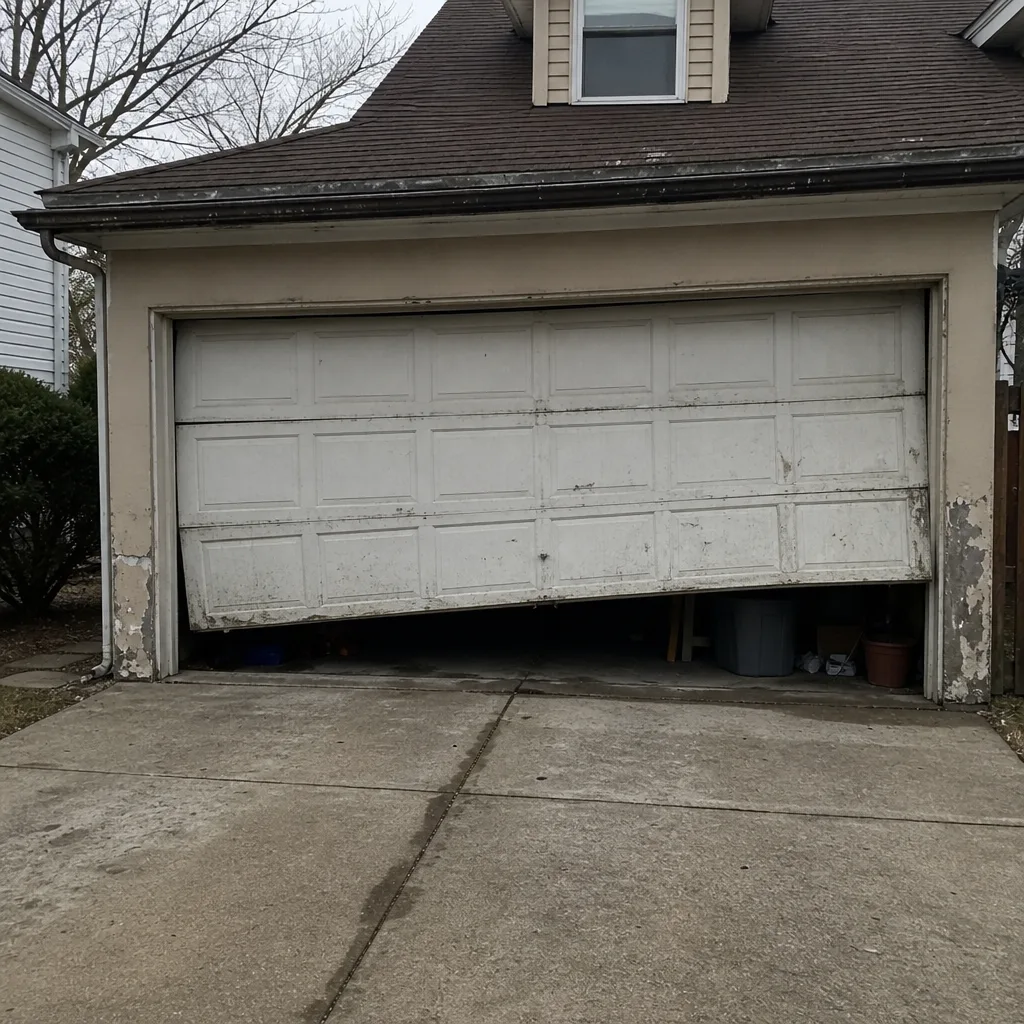 Before
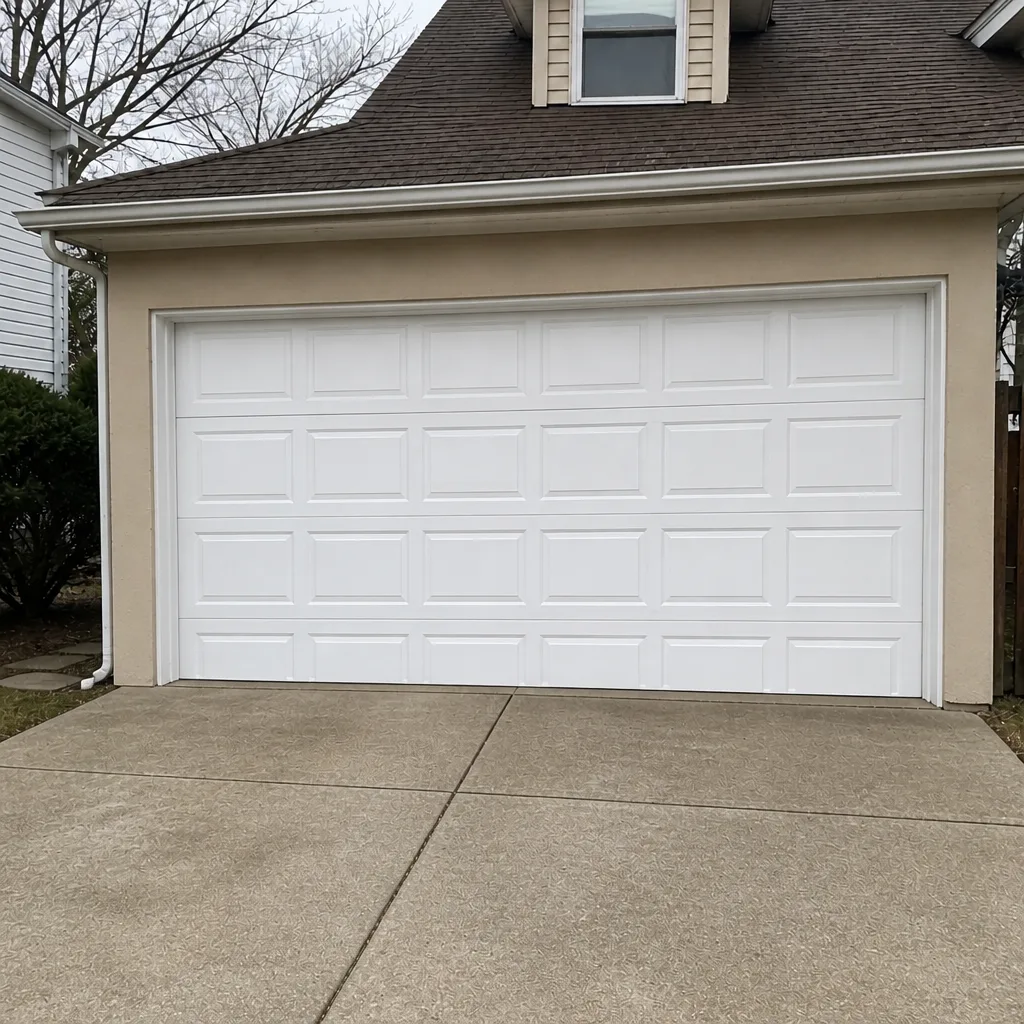 After
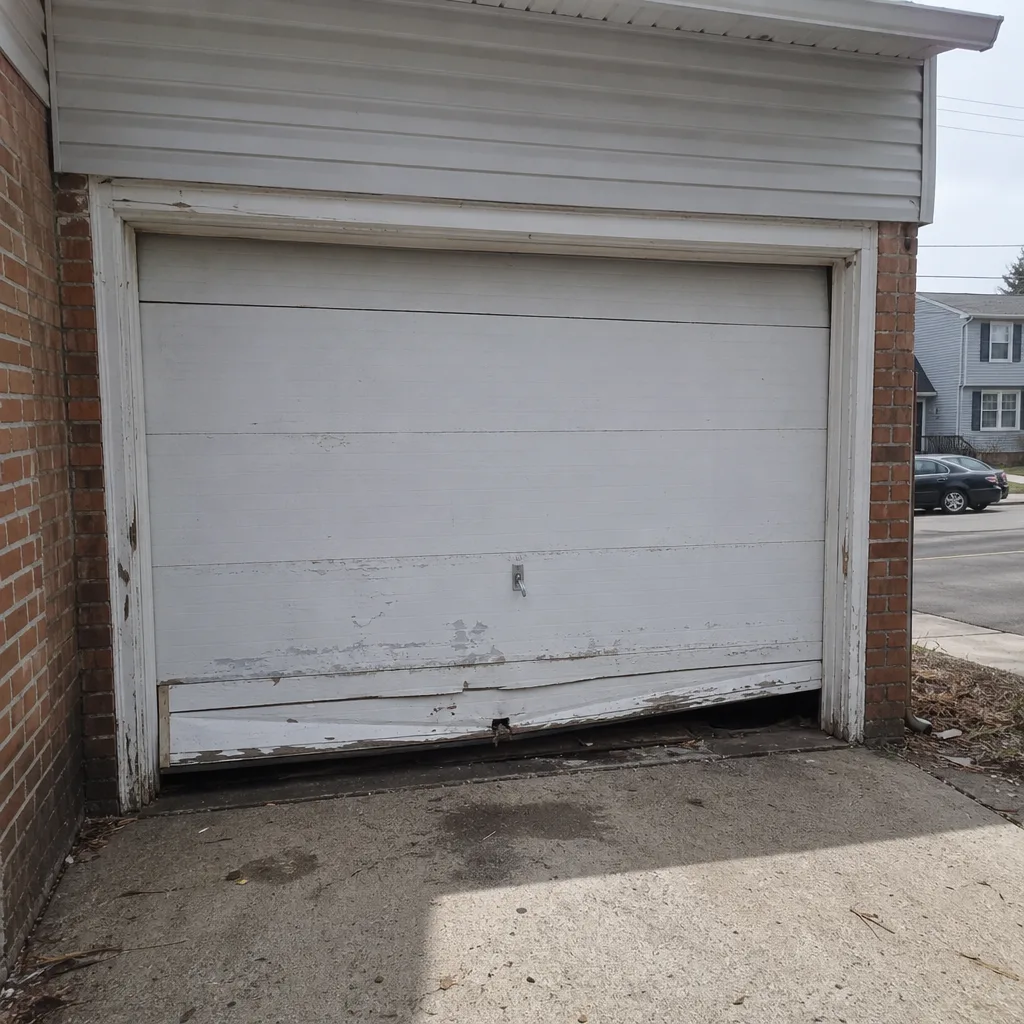 Before
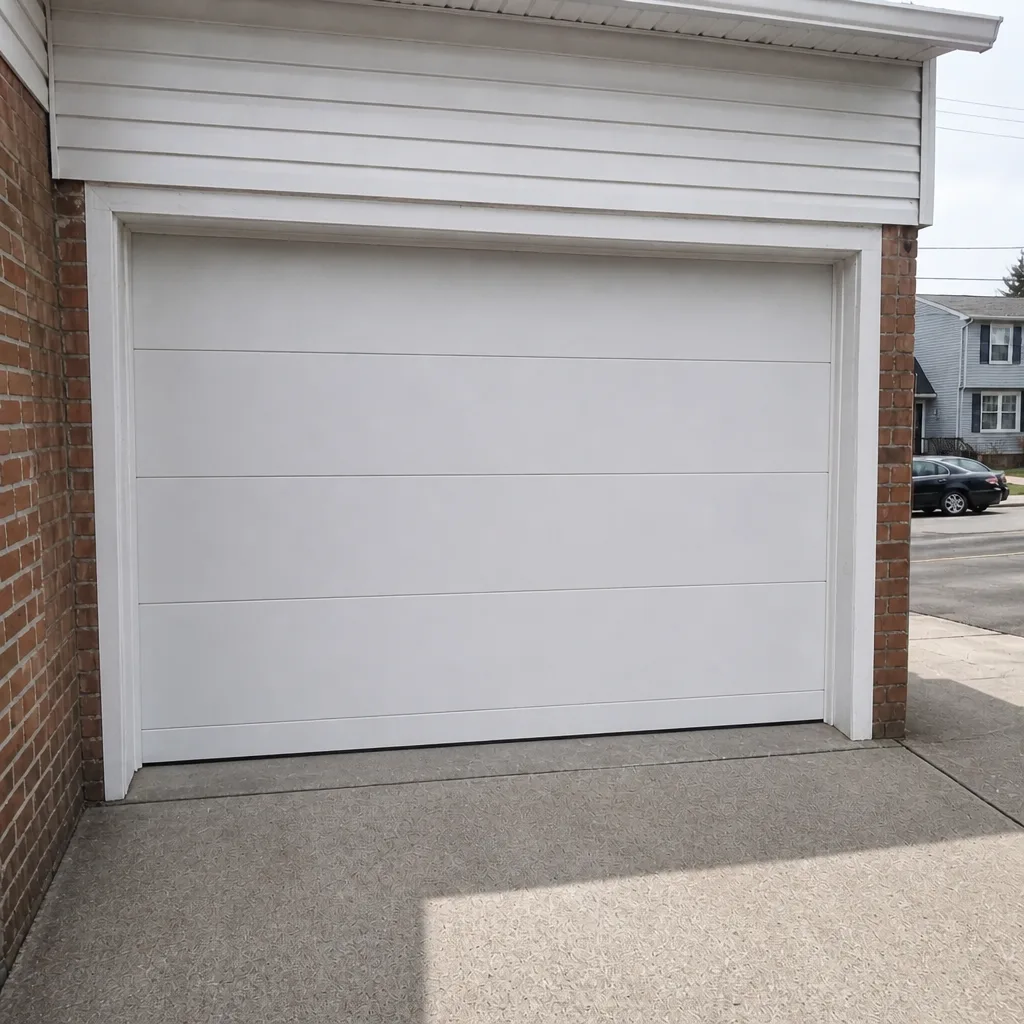 After
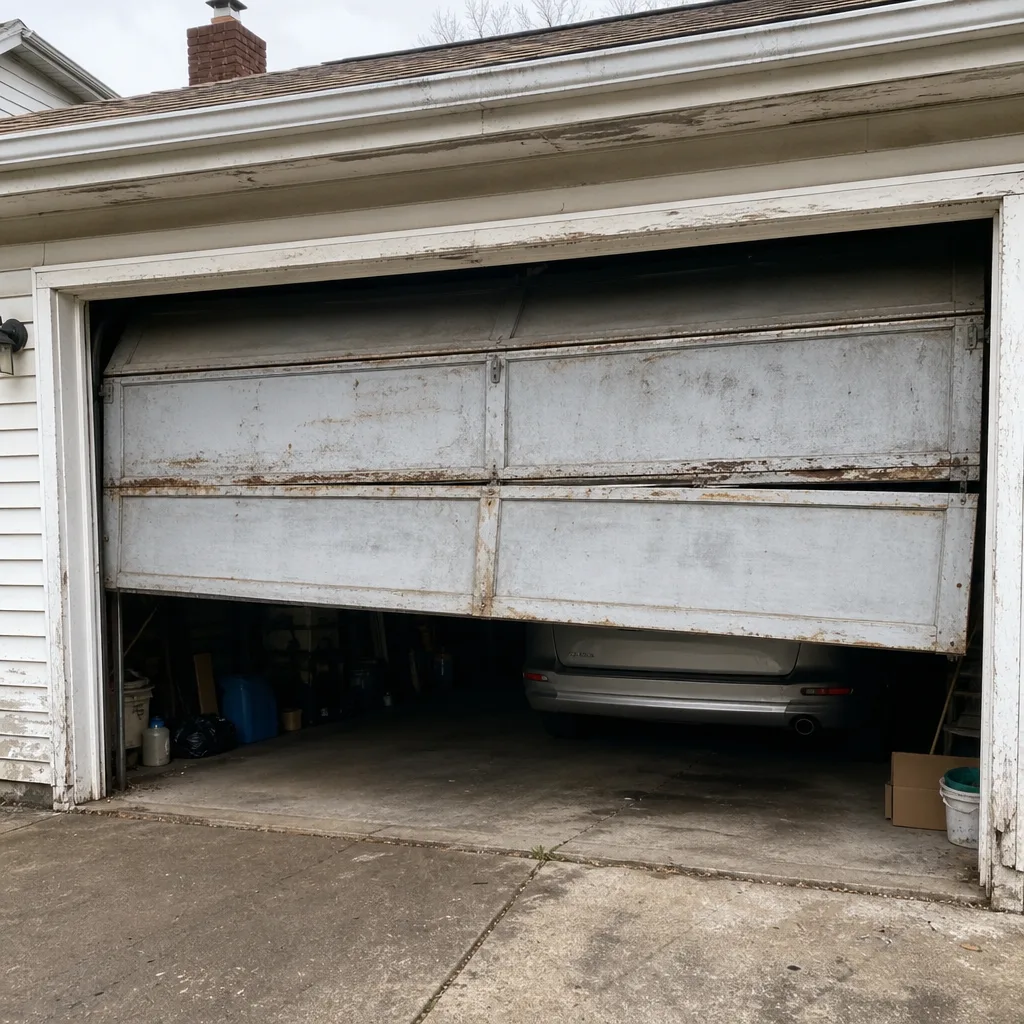 Before
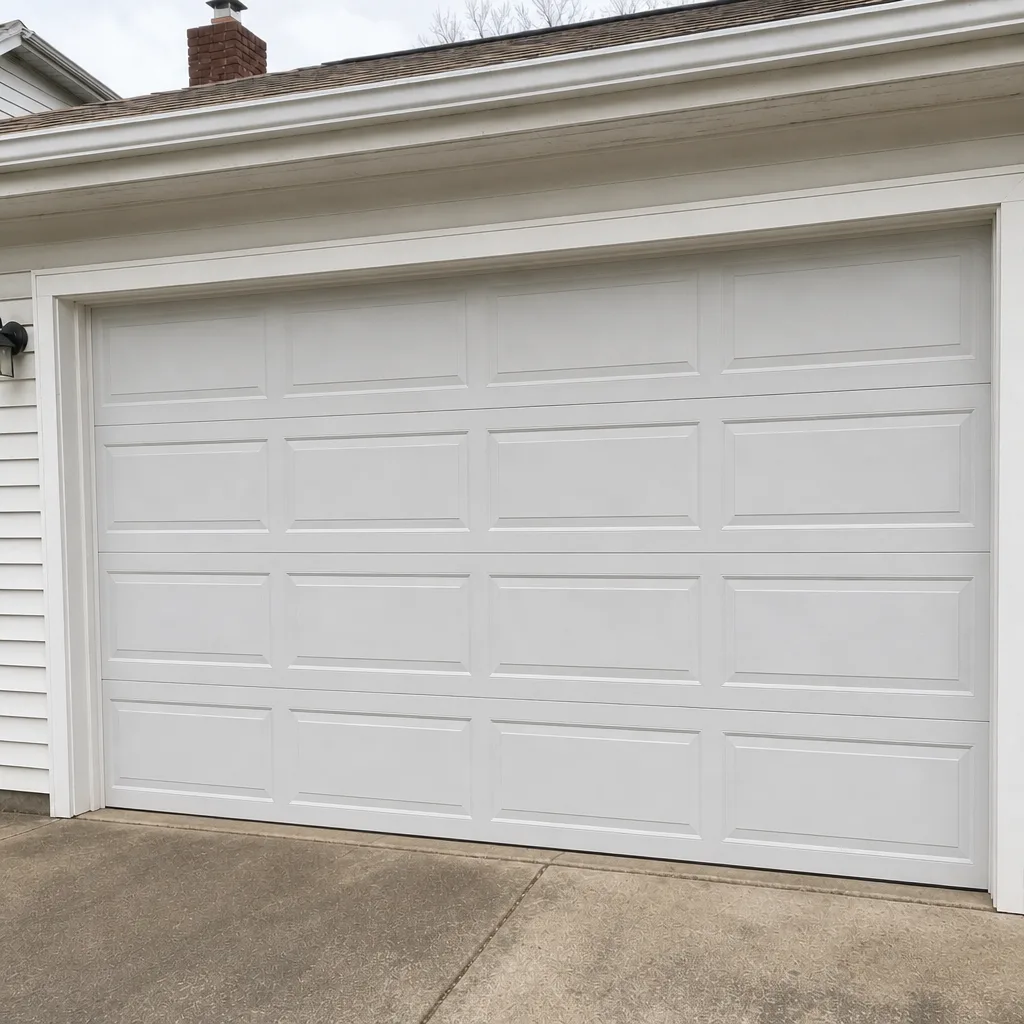 After
When to Call a Professional
Some garage door issues are safe to handle yourself: a remote that needs a fresh battery, a sensor eye that’s been knocked out of line, a track that has a bit of debris in it. Others aren’t. Call a technician if the door won’t open or close, lifts unevenly, or slams at the end of its travel. Call if you see a broken spring, a frayed cable, or a door that’s visibly out of its track. Call if the opener is grinding, humming without moving, or has started reversing for no reason. And call if you’re planning a replacement and want someone to measure the opening and confirm what will actually fit. Elizabeth Garage Door Repair Pros offers free estimates in Elizabeth – call (833) 654-0980. We answer 24/7. Fast dispatch from 7am to 7pm, Sunday through Friday.
Frequently Asked Questions
In most cases yes, and the requirements can differ for attached versus detached garages. Call the City of Elizabeth building department before you order anything, because permit rules change and only the department can confirm what applies to your property. If you’re working with us, we’ll remind you to check before scheduling, and we’ll work with whatever inspection the city requires.
Garage door repair typically runs $150 to $450 per issue, with spring work in its own range. A single torsion spring replacement usually falls around $200 to $380, and a matched pair costs about twice that because both springs are replaced together. The written estimate sets the final price and is agreed before any work starts. Call (833) 654-0980 for a free estimate. We answer 24/7. Fast dispatch from 7am to 7pm, Sunday through Friday.
Same-day service is available for repair and emergency calls, subject to scheduling. If your door is stuck or a spring has failed, call and we’ll book the soonest opening. We answer 24/7. Fast dispatch from 7am to 7pm, Sunday through Friday.
Most likely headroom. Many garages built before the 1970s in Elizabeth don’t have the ceiling clearance for a standard overhead door’s travel, especially in colonials and row homes where the garage was squeezed into an existing footprint. A low-headroom conversion kit changes how the door travels so a standard panel door works in a tighter space. The only way to know for sure is an on-site measure.
We work on LiftMaster, Chamberlain, Genie, Clopay, Amarr, Wayne Dalton, Craftsman, and Raynor equipment. That covers the openers and doors most commonly installed in Elizabeth homes. Knowing the brand means the diagnosis starts from the right point, which usually shortens the job.
The local professional we connect you with is licensed and insured as their state requires. Ask for the details when you get the estimate, and we’ll make sure you have them. Call (833) 654-0980 for a free estimate. We answer 24/7. Fast dispatch from 7am to 7pm, Sunday through Friday.
The Bottom Line
A garage door project in Elizabeth starts with the building. Older homes mean tighter clearances, framing that may need reinforcement, and openings that don’t match catalog sizes, so the measure comes before the order. Material choice should account for humid summers and road salt, and opener selection depends on headroom and door weight. Attached garages call for insulation and quieter drives, detached garages allow more flexibility, and both need the city’s permit rules confirmed before you commit. Repair beats replacement when the structure is sound and the problem is a single part. When it isn’t, a measured installation with a written price is the safe path. If you’re ready to have someone look, Elizabeth Garage Door Repair Pros connects you with a local professional who knows the brands and the city’s housing stock. Call (833) 654-0980 for a free estimate. We answer 24/7. Fast dispatch from 7am to 7pm, Sunday through Friday. The price is quoted and agreed before any work starts.
Written by the team at Elizabeth Garage Door Repair Pros.